
The Hidden Cost of Manual Inventory Management in Restaurant Kitchens
The Problem With Manual Inventory Management
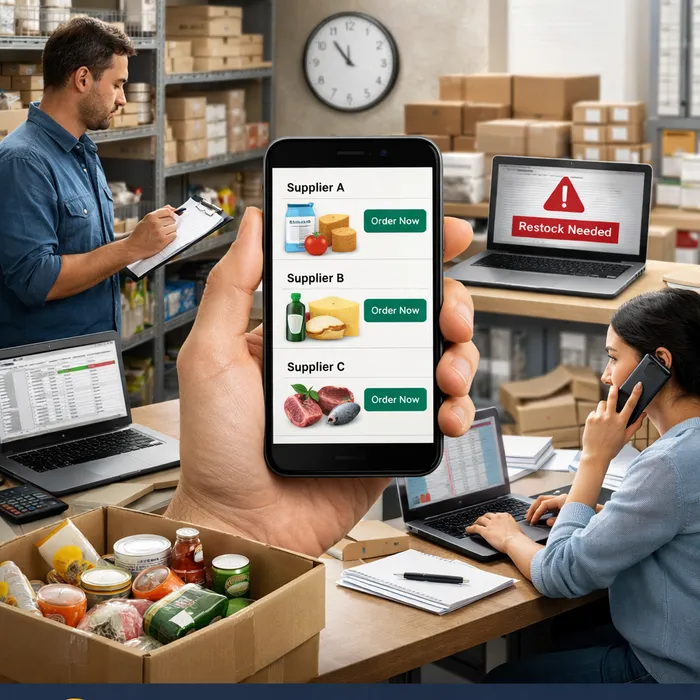
Manual inventory management is still the default in many restaurant kitchens. Staff walk into storage rooms with clipboards, spreadsheets, or POS printouts, counting boxes of produce, meat, and dry goods one by one.
At first glance, the process seems manageable. But when kitchens grow busier, menus expand, and supplier networks increase, manual inventory management quietly becomes one of the biggest operational time drains.
A kitchen manager might spend hours every week doing tasks like:
- Checking stock levels across refrigerators, freezers, and dry storage
- Comparing current stock with expected usage
- Identifying missing ingredients before service
- Calling or messaging multiple suppliers
- Placing urgent restock orders
The real cost isn’t just the time spent counting inventory. It’s the cascading operational friction that happens when inventory decisions are slow, inaccurate, or reactive.
Why Inventory Becomes a Daily Firefighting Exercise
Restaurant inventory moves fast. Ingredients arrive, get prepped, used, wasted, or substituted constantly throughout the day. Without a clear system, kitchens rely heavily on memory and last-minute checks.
This leads to a few common problems.
1. Stock Visibility Is Always Delayed
When inventory is tracked manually, the data is already outdated the moment it’s written down.
A chef might count 20 portions of chicken in the morning. By mid-service, that number may have dropped significantly due to prep, special orders, or unexpected demand. Without real-time visibility, teams often discover shortages too late.
2. Supplier Ordering Becomes Fragmented
Many kitchens rely on multiple suppliers:
- Produce suppliers
- Meat and seafood vendors
- Dry goods wholesalers
- Specialty ingredient providers
When stock runs low, someone has to quickly figure out:
- Which supplier carries the needed item
- Who can deliver fastest
- Whether minimum order thresholds apply
This often results in managers messaging several suppliers at once just to secure ingredients before the next service window.
3. Staff Time Gets Pulled Away From the Kitchen
Inventory management isn’t just an administrative task. It often pulls chefs, managers, or senior staff away from cooking, planning menus, or managing the team.
Over time, this creates hidden operational costs:
- Managers working late to reconcile inventory
- Emergency supplier calls before service
- Duplicate orders or missed ingredients
- Food waste from over-ordering
These inefficiencies accumulate quietly but consistently.
The Real Operational Cost of Manual Inventory Management
When kitchens rely entirely on manual inventory management, the issue isn’t just inconvenience. It directly affects operational performance.
Some of the most common outcomes include:
Inconsistent Stock Levels
Without clear forecasting, kitchens tend to swing between two extremes:
- Overstocking ingredients that expire
- Running out of critical items mid-service
Both situations hurt profitability and customer experience.
Slower Decision-Making
If a manager needs to check multiple storage areas and supplier catalogs just to place an order, restocking becomes slow and reactive.
In busy kitchens, every delay matters.
Supplier Inefficiency
Ordering from different suppliers manually often means:
- Comparing prices manually
- Checking delivery availability
- Tracking separate invoices
- Repeating the same process every week
A process that should take minutes can easily stretch into hours.
How Smarter Kitchens Handle Inventory Today
Modern restaurant operations are starting to treat inventory management as a system rather than a weekly chore.
Instead of relying purely on manual checks, kitchens increasingly combine:
- digital stock tracking
- automated reorder suggestions
- centralized supplier ordering
- usage-based forecasting
This shifts inventory from reactive counting to proactive planning.
When kitchens know what ingredients are being used, what is running low, and which supplier can restock fastest, the entire ordering process becomes smoother.
This shift mirrors a broader trend across industries. Many operations are adopting AI-supported workflows and virtual operational teams to handle repetitive coordination tasks. If you’re curious about this broader shift, the article why AI virtual teams are the future explores how intelligent systems are changing operational work.
Inventory Speed Matters More Than Ever
Restaurants operate on tight margins and tight timelines. A missing ingredient can disrupt an entire service.
Fast inventory response means:
- quicker supplier ordering
- fewer emergency substitutions
- more consistent menu availability
- less staff time spent counting and calling vendors
The kitchens that scale successfully are often the ones that reduce operational friction behind the scenes.
Inventory is one of the biggest opportunities to do that.
Moving From Inventory Tracking to Inventory Intelligence
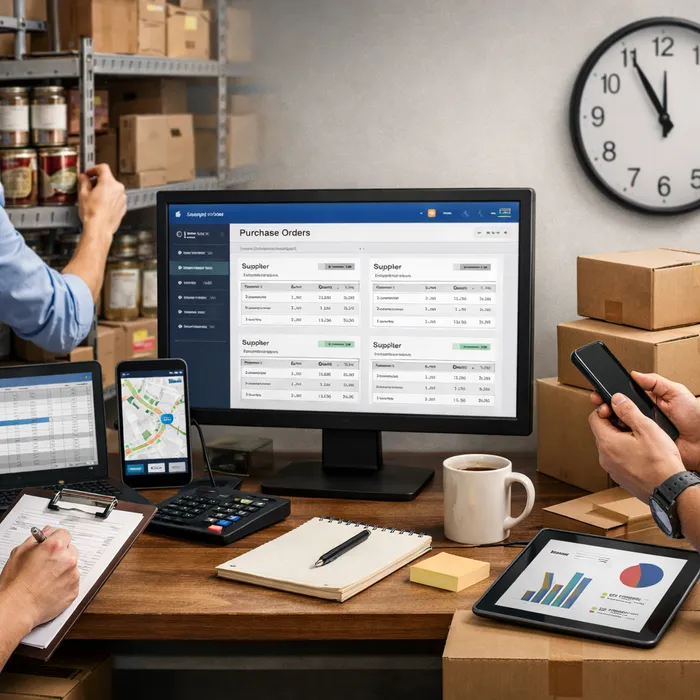
The goal isn’t simply to digitize inventory lists. The real shift is toward inventory intelligence: systems that understand stock levels, usage patterns, and supplier availability.
When these pieces connect, kitchens can:
- detect low stock earlier
- recommend supplier orders automatically
- reduce manual counting
- coordinate restocking faster
Instead of spending hours managing inventory manually, kitchen teams can focus on what actually drives value: food quality, service, and operational consistency.
A Smarter Way to Manage Kitchen Inventory
Kitchen operations are complex enough without adding hours of manual inventory checks and supplier coordination every week.
KitchenCrew is designed to reduce that operational burden by helping kitchens manage stock levels, supplier orders, and inventory workflows more efficiently.
If your team is still spending hours checking storage rooms, messaging suppliers, and rushing last-minute orders before service, it might be time to rethink the process.
Explore how it works at:
https://kitchen.goldcrew.ai/
Written by
Aurum Avis Labs
Passionate about AI-powered business automation and helping solopreneurs succeed.
Related Articles
You might also be interested in these articles